
2022 Design Awards Winners Gallery
CONGRATULATIONS TO OUR 2022 EXCELLENCE IN DESIGN AWARDS WINNERS
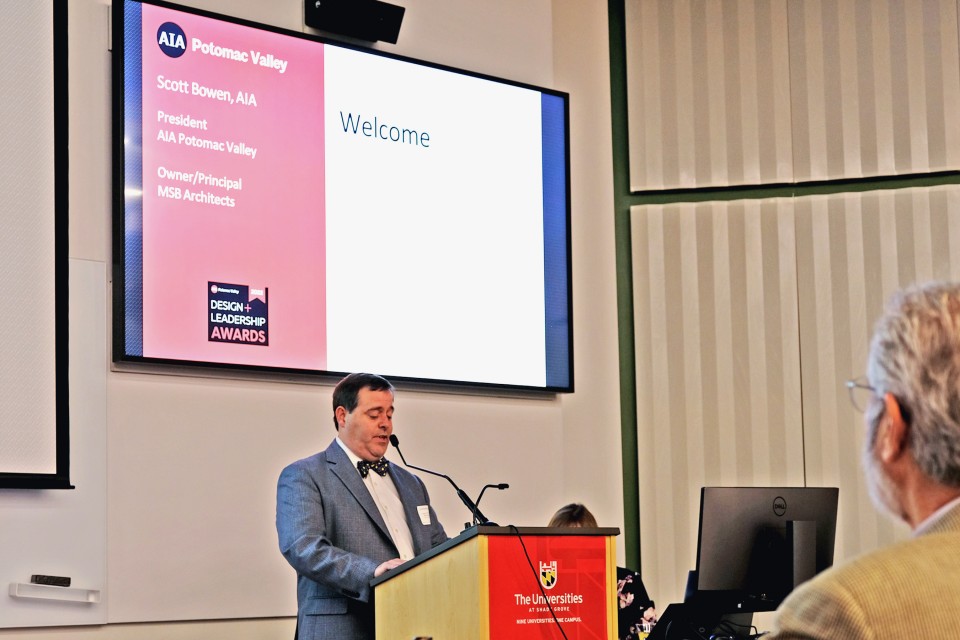
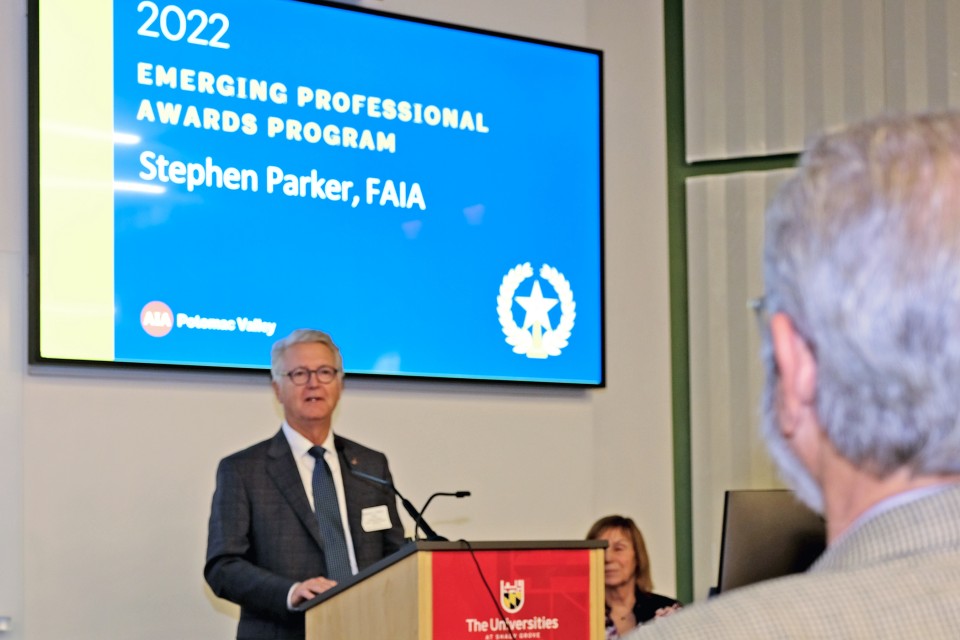
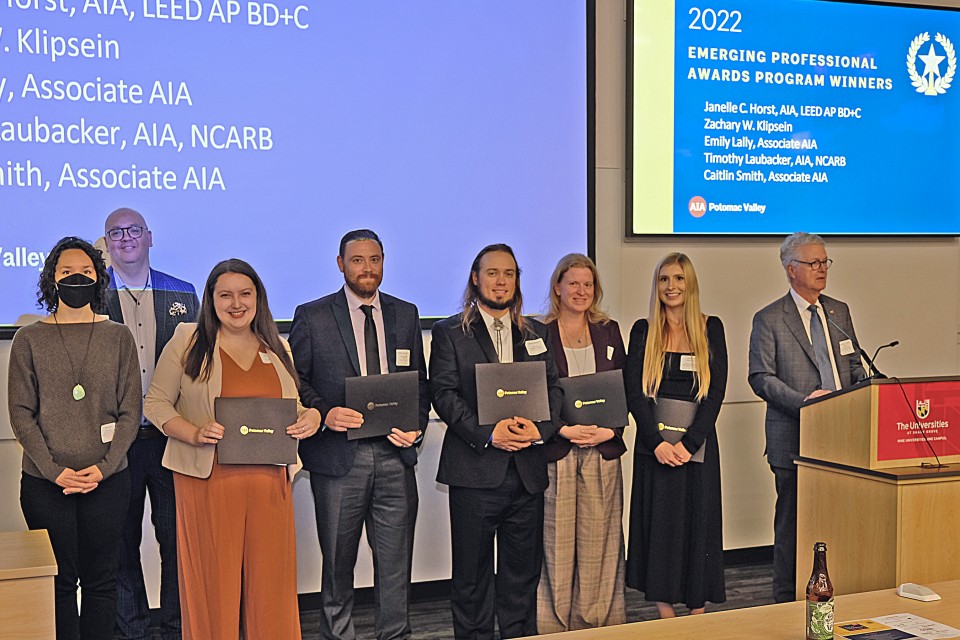
AIAPV Awards Committee Chair Scott Knudson, AIA, along with AIAPV President Scott Bowen, AIA recognized 11 award-winning projects at this year's Excellence in Design Awards during the in-person AIAPV Design + Leadership 2022 awards celebration on Thursday, October 20 at the Universities at Shady Grove Biomedical Sciences and Engineering (BSE) Education Facility, in Rockville. Additionally, Stephen Parker, FAIA recognized the winners from AIAPV's 2nd Annual Emerging Professional Awards Program (EPAP).
Design + Leadership Awards is AIA Potomac Valley’s biggest event of the year, providing the opportunity for architects and the greater design community to network with professional peers, celebrate the best work of our members and our region through the chapter's Excellence in Design Awards program, and recognize outstanding leadership with the presentation of our Kea and Emerging Professional Awards.
You can view an online gallery of all entries in the 2022 Design Awards competition on the Maryland AIA Projects Gallery as well as access a photo slideshow of the entries and interview with the jury chair on this web page. Congratulations to our 2022 award recipients!
To view event photos from AIAPV's 2022 Design + Leadership Awards, click here.
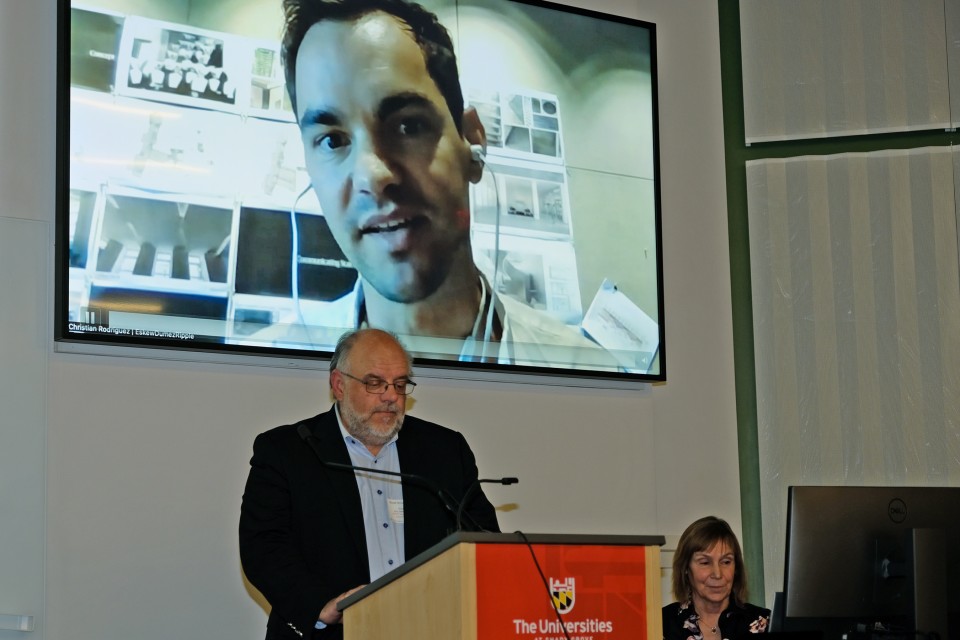
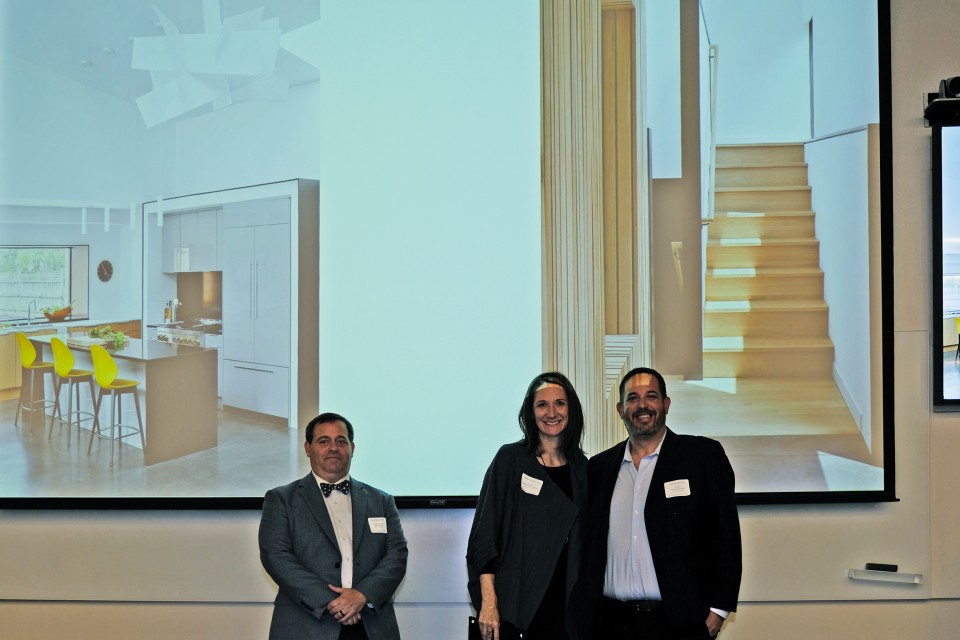
Scroll to the bottom of this page to view photos of the Design Awards ceremony.
2022 AIA POTOMAC VALLEY EXCELLENCE IN DESIGN AWARDS
Click the image of each winning project below to see full project descriptions and photos.
GOLD AWARD
Recognizing “Best in Show” – Non-Residential
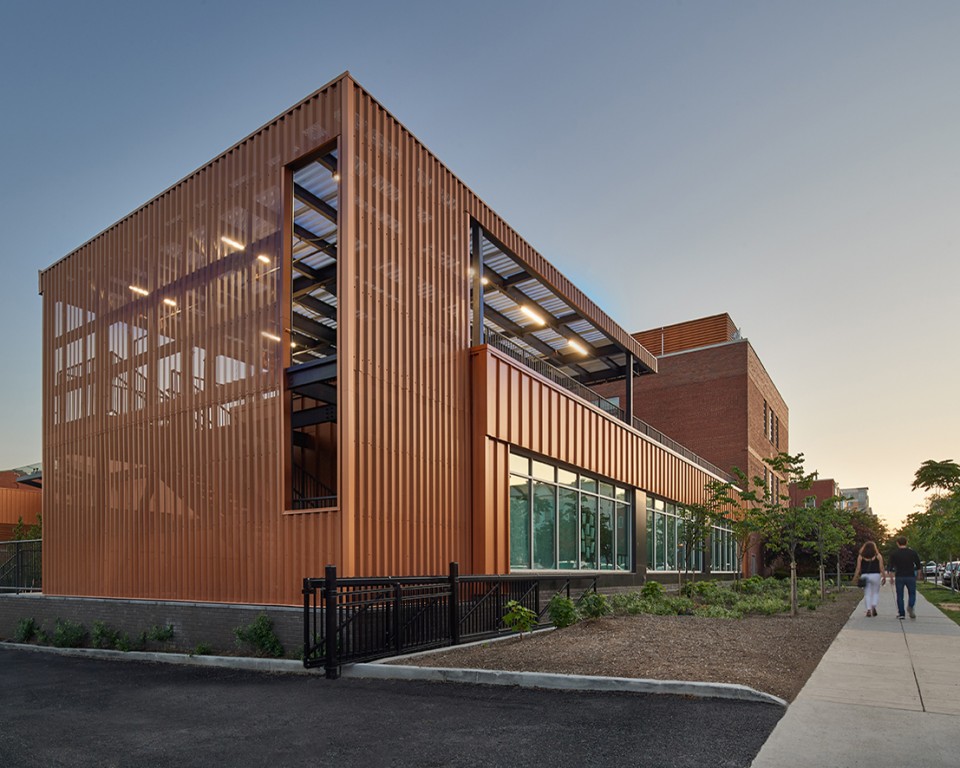 GOLD ─ Non-Residential ─ Institutional Architecture
PROJECT Van Ness Elementary School
LOCATION Washington, District of Columbia
ARCHITECT ISTUDIO Architects
ARCHITECTURAL DESIGN TEAM Rick Schneider, FAIA; Vivek Sarma, AIA; Daniel Blair, AIA; Sara Al Khatib
OWNER/CLIENT District of Columbia, Department of General Services
CONTRACTOR Broughton Construction
PHOTOGRAPHER Kristopher Ilich; ISTUDIO Architects
PROJECT DESCRIPTION
Van Ness Elementary School’s fast track summer expansion includes a new wing addition with rooftop classrooms, historic renovation of a field house, and new playgrounds. The team focused on wellness forward design exceeding the LEED-S standard and DCPS’s 21st Century Education specifications. The field house leaned into historic construction techniques incorporating natural ventilation. Previously in deficit of stormwater credits, the addition provides green roofs and landscaping including rain and pollinator gardens for outdoor education.
JURY
A tasteful addition that boasts beautifully connected and engaging outdoor spaces. This project excels in breathing new life into an existing campus in a refreshing way. Additions of this sort often prove challenging. This school succeeds by clearly announcing the new while paying homage to the old with sympathetic geometries and a warm material palette.
GOLD AWARD
Recognizing “Best in Show” – Residential
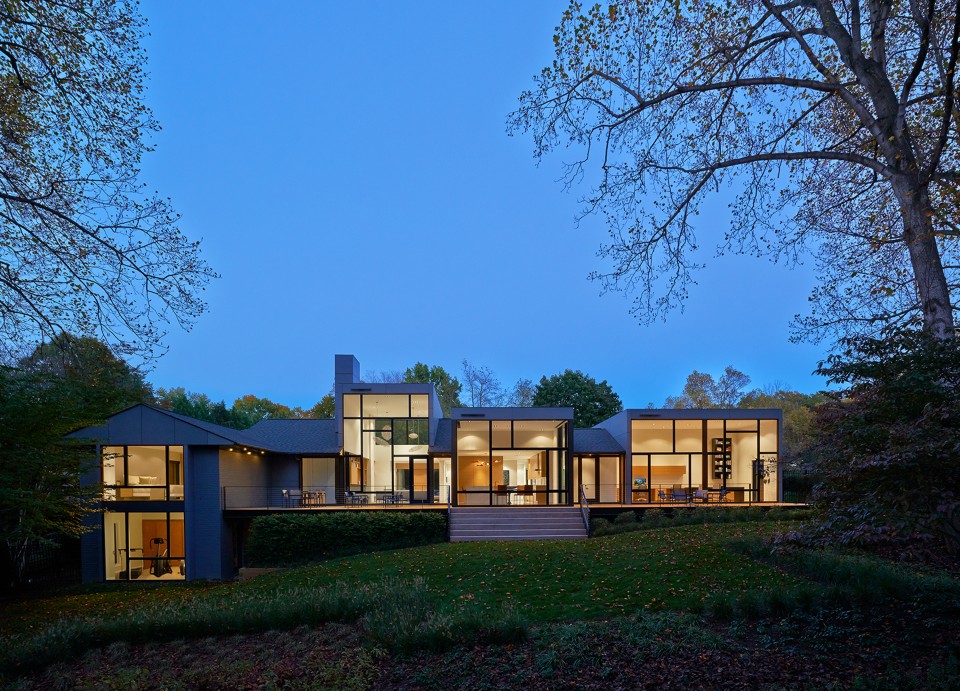 GOLD ─ Residential ─ Residential Architecture
PROJECT Twining Road Renovation
LOCATION Potomac, Maryland
ARCHITECT Robert M. Gurney, FAIA, Architect
ARCHITECTURAL DESIGN TEAM Robert M. Gurney, FAIA, Principal; Claire L. Andreas, Project Architect; Kara R. McHone, Project Architect
OWNER/CLIENT Confidential
CONTRACTOR Added Dimensions, Inc.
LANDSCAPE ARCHITECT Campion Hruby Landscape Architects
PHOTOGRAPHER Anice Hoachlander
PROJECT DESCRIPTION
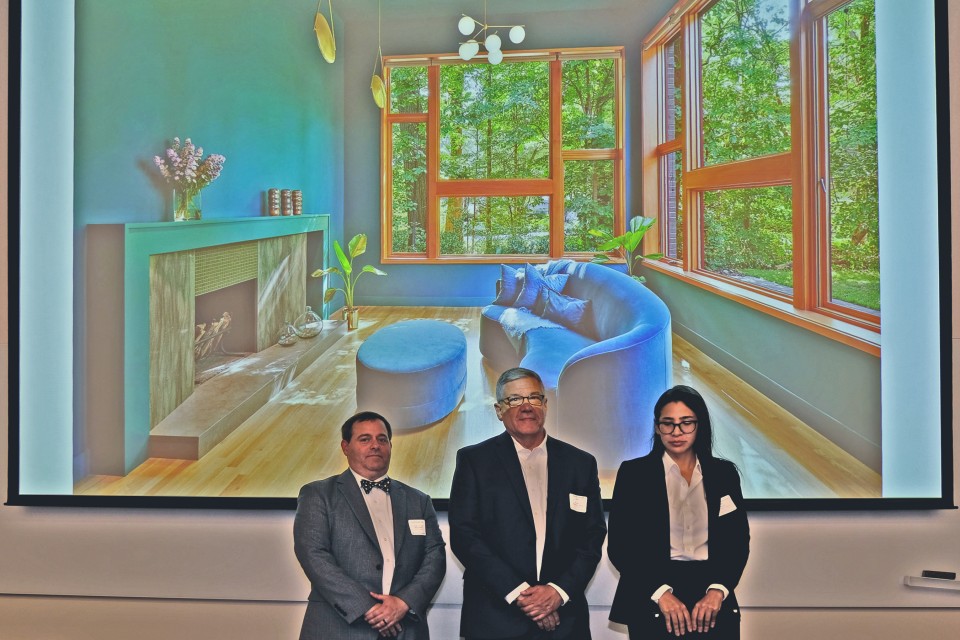
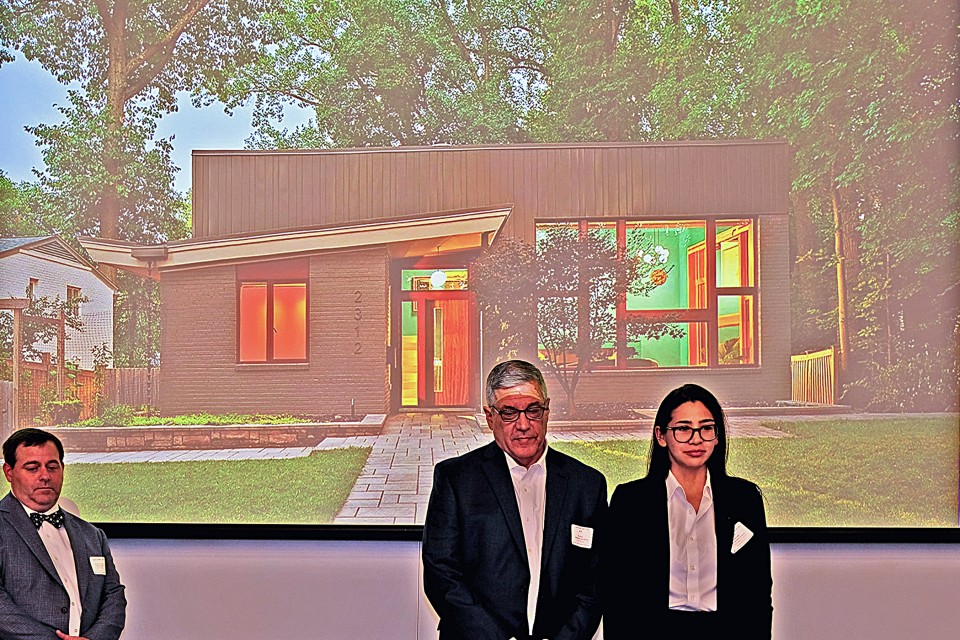
Twining Road Renovation attempts to better organize the house, provide a more open floor plan, and infuse the house with natural light. The desire was to create a new scheme that was updated, comprehensive and unified while adding minimal square footage. With high ceilings and an abundance of glass, this space is oriented to take advantage of the wooded views. Detailing is minimal and crisp, allowing natural light and views to take center stage.
JURY
This project takes a compelling approach to the renovation of a 1980’s ranch home that juxtaposes the existing long horizontal rooflines with new vertical interventions. The resulting home cleverly integrates old and new and creates large light-filled new spaces with refined details and connections between home and the wooded surroundings.
PV AWARD
Recognizing the best project exemplifying elements of the AIA’s Framework for Design Excellence
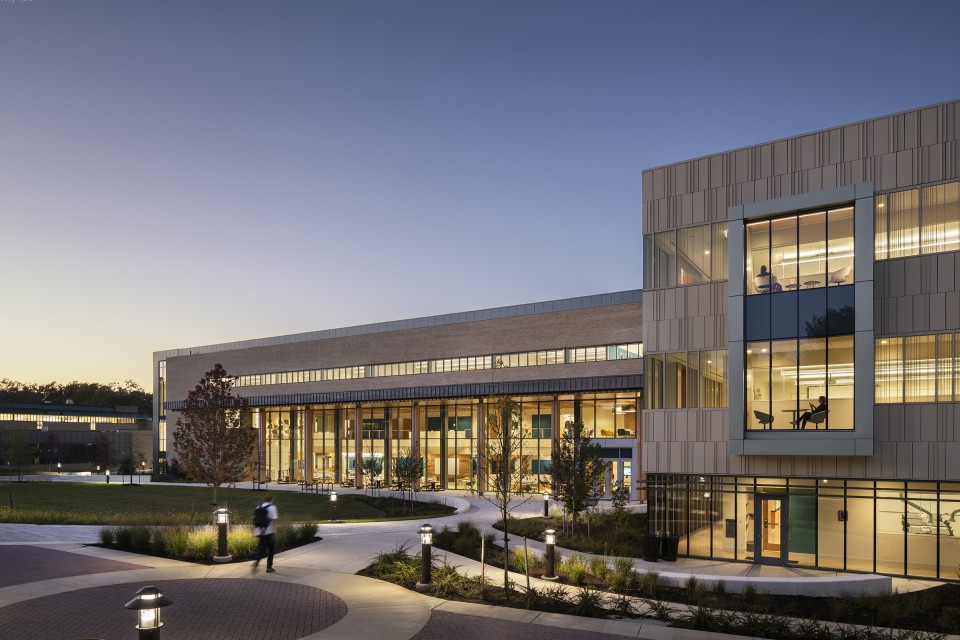 PV Award ─ Institutional Architecture
PROJECT Anne Arundel Community College Health and Life Sciences Building
LOCATION Arnold, Maryland
ARCHITECT SmithGroup
ARCHITECTURAL DESIGN TEAM SmithGroup – Architect of Record, Architecture, Interior Design, Mechanical, Electrical, and Fire Protection Engineering, Lab and Space Planning, Team Members: Greg Mella, Lori Cappuccio, Chris Purdy, Josh Vacca, Patricia Halaby, Jamison Caldwell, Paul Urbanek, David Lang, Dennis Daisey, Joanne Valencia, Samantha Kim, Dafeng Cai, Angie Peretti, and Kyle Lehman
OWNER/CLIENT Anne Arundel Community College
CONTRACTOR Whiting-Turner Contracting Company / Jeff Hossfeld
LANDSCAPE ARCHITECT Mahan Rykiel
PHOTOGRAPHER James Ewing
PROJECT DESCRIPTION
A new shared home for Anne Arundel Community College’s Health Sciences and Biology programs is designed to promote a culture of life-long learning and interdisciplinary collaboration for the next generation of science, nursing, and health care professionals. The two programs are united under one roof and the College has a LEED Gold facility to match the caliber of its academics and commitment to the environment.
JURY
We found this to be a compelling design solution inside and out. The blurring of glass and concrete panels through vertical texture on the faced and the generous use of carefully detailed wood on the interior create a building that is at once sophisticated and welcoming. Beyond its beauty, this project went further than any other pursuing each aspect of the AIA Framework within the constraints of the budget. Installing significant native landscape on site, integrating chilled beam and DOAS technologies to minimize operational carbon, and using recycled materials were just a few of the extra efforts enabling the project to achieve LEED Gold instead of its required LEED Silver. The jury commends the balanced approach.
HONOR AWARD
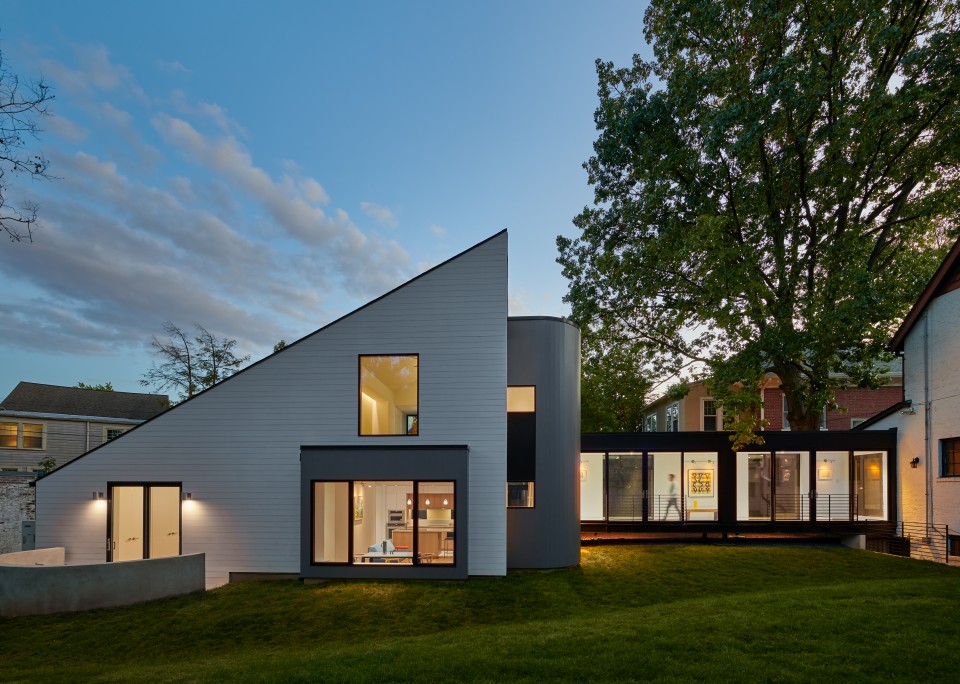 HONOR ─ Residential Architecture
PROJECT ADU Crestwood
LOCATION Washington, District of Columbia
ARCHITECT McInturff Architects
ARCHITECTURAL DESIGN TEAM Mark McInturff FAIA, David Mogensen AIA
OWNER/CLIENT Confidential
CONTRACTOR Acadia Contractors / Paul Jeffs
LANDSCAPE ARCHITECT Lila Fendrick Landscape Architects
PHOTOGRAPHER Anice Hoachlander
PROJECT DESCRIPTION
This addition can function as a suite for aging parents, an ADU, or a guest room. Pushing the mass to the side and back of the yard allowed space for family activities and privacy for parents. A state-of-the-art mechanical system operates within a highly insulated thermal envelope; the roof will eventually support solar panels. Careful detailing, simple surfaces and ample views create an interior that lives larger than it is.
JURY
Our team appreciates this project as a model for increased density in residential neighborhoods and for its compact but elegant details. In particular the connection between old and new creates a glazed and delicate bridge space that can be opened creating a comfortable connection in all seasons.
HONOR ─ Institutional Architecture
PROJECT Van Ness Elementary School
LOCATION Washington, District of Columbia
ARCHITECT ISTUDIO Architects
ARCHITECTURAL DESIGN TEAM Rick Schneider, FAIA; Vivek Sarma, AIA; Daniel Blair, AIA; Sara Al Khatib
OWNER/CLIENT District of Columbia, Department of General Services
CONTRACTOR Broughton Construction
PHOTOGRAPHER Kristopher Ilich; ISTUDIO Architects
PROJECT DESCRIPTION
Van Ness Elementary School’s fast track summer expansion includes a new wing addition with rooftop classrooms, historic renovation of a field house, and new playgrounds. The team focused on wellness forward design exceeding the LEED-S standard and DCPS’s 21st Century Education specifications. The field house leaned into historic construction techniques incorporating natural ventilation. Previously in deficit of stormwater credits, the addition provides green roofs and landscaping including rain and pollinator gardens for outdoor education.
JURY
A tasteful addition that boasts beautifully connected and engaging outdoor spaces. This project excels in breathing new life into an existing campus in a refreshing way. Additions of this sort often prove challenging. This school succeeds by clearly announcing the new while paying homage to the old with sympathetic geometries and a warm material palette.
HONOR ─ Residential Architecture
PROJECT Twining Road Renovation
LOCATION Potomac, Maryland
ARCHITECT Robert M. Gurney, FAIA, Architect
ARCHITECTURAL DESIGN TEAM Robert M. Gurney, FAIA, Principal; Claire L. Andreas, Project Architect; Kara R. McHone, Project Architect
OWNER/CLIENT Confidential
CONTRACTOR Added Dimensions, Inc.
LANDSCAPE ARCHITECT Campion Hruby Landscape Architects
PHOTOGRAPHER Anice Hoachlander
PROJECT DESCRIPTION
Twining Road Renovation attempts to better organize the house, provide a more open floor plan, and infuse the house with natural light. The desire was to create a new scheme that was updated, comprehensive and unified while adding minimal square footage. With high ceilings and an abundance of glass, this space is oriented to take advantage of the wooded views. Detailing is minimal and crisp, allowing natural light and views to take center stage.
JURY
This project takes a compelling approach to the renovation of a 1980’s ranch home that juxtaposes the existing long horizontal rooflines with new vertical interventions. The resulting home cleverly integrates old and new and creates large light-filled new spaces with refined details and connections between home and the wooded surroundings.
MERIT AWARD
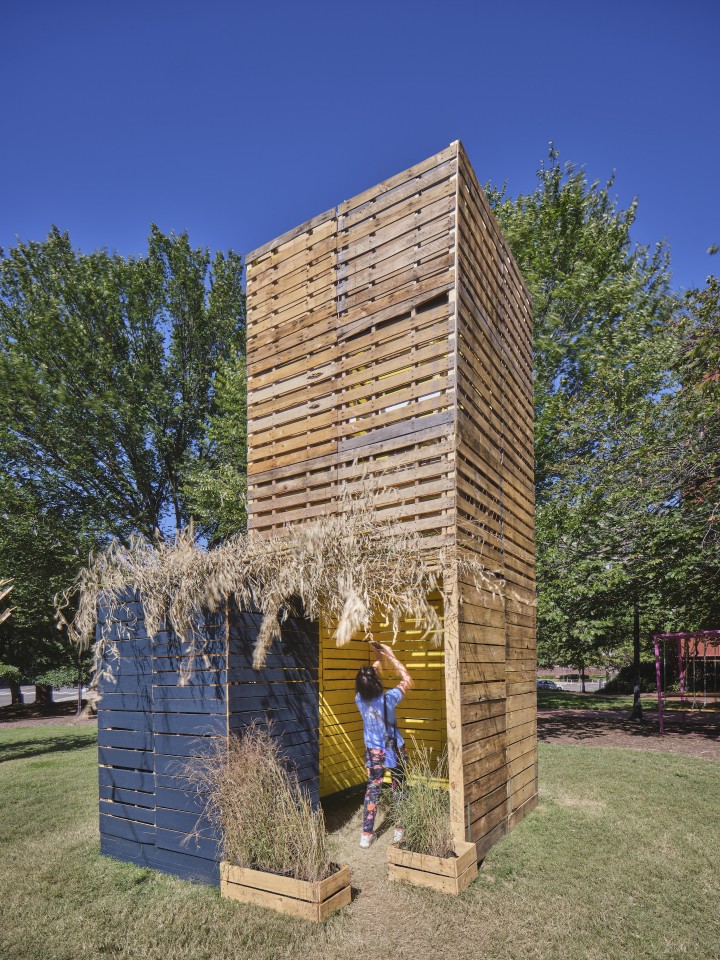 MERIT ─ Small Projects
PROJECT Reorienting the Pallet
LOCATION Washington, District of Columbia
ARCHITECT Knu Design, LLC and Cedar Architecture
ARCHITECTURAL DESIGN TEAM Scott Knudson, Knu Design LLC and Deborah Buelow, Cedar Architecture
OWNER/CLIENT Capital Jewish Museum and National Building Museum
CONTRACTOR Cedar Architecture / Cory Sanna
PHOTOGRAPHER Prakash Patel Photography
PROJECT DESCRIPTION
Pallets—the discards of gentrification—are elevated to create this ephemeral place of renewal. Part of the Capital Jewish Museum’s City Sukkah xDC exhibit at the National Building Museum, this is not architecture as object, but choreography. The movements recall the Israelite’s wilderness experience and recent global disorientations. At the core, you instinctively look up to see cascading stars frame the sky. This physical reorientation transforms your perspective, then plants graze your departure, regrounding you.
JURY
While to a degree expected in this type of project, the austerity and ingenuity of this project was delightful and inspired. The resourcefulness of the material selections and their reorganization deserve recognition, while the spatial and experiential effects exceeded their modest origins.
MERIT ─ Institutional Architecture
PROJECT Anne Arundel Community College Health and Life Sciences Building
LOCATION Arnold, Maryland
ARCHITECT SmithGroup
ARCHITECTURAL DESIGN TEAM SmithGroup – Architect of Record, Architecture, Interior Design, Mechanical, Electrical, and Fire Protection Engineering, Lab and Space Planning, Team Members: Greg Mella, Lori Cappuccio, Chris Purdy, Josh Vacca, Patricia Halaby, Jamison Caldwell, Paul Urbanek, David Lang, Dennis Daisey, Joanne Valencia, Samantha Kim, Dafeng Cai, Angie Peretti, and Kyle Lehman
OWNER/CLIENT Anne Arundel Community College
CONTRACTOR Whiting-Turner Contracting Company / Jeff Hossfeld
LANDSCAPE ARCHITECT Mahan Rykiel
PHOTOGRAPHER James Ewing
PROJECT DESCRIPTION
A new shared home for Anne Arundel Community College’s Health Sciences and Biology programs is designed to promote a culture of life-long learning and interdisciplinary collaboration for the next generation of science, nursing, and health care professionals. The two programs are united under one roof and the College has a LEED Gold facility to match the caliber of its academics and commitment to the environment.
JURY
We found this to be a compelling design solution inside and out. The blurring of glass and concrete panels through vertical texture on the faced and the generous use of carefully detailed wood on the interior create a building that is at once sophisticated and welcoming. Beyond its beauty, this project went further than any other pursuing each aspect of the AIA Framework within the constraints of the budget. Installing significant native landscape on site, integrating chilled beam and DOAS technologies to minimize operational carbon, and using recycled materials were just a few of the extra efforts enabling the project to achieve LEED Gold instead of its required LEED Silver. The jury commends the balanced approach.
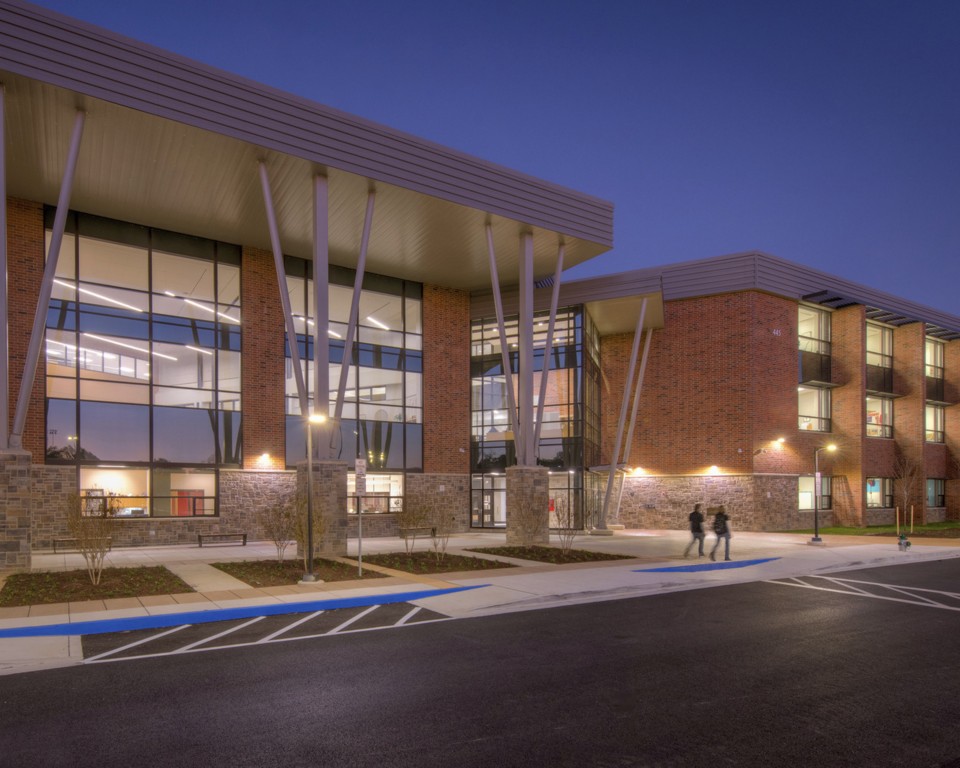 MERIT ─ Institutional Architecture
PROJECT Havre de Grace Middle / High School
LOCATION Havre de Grace, Maryland
ARCHITECT Grimm + Parker Architects
ARCHITECTURAL DESIGN TEAM Antonio Rebelo, AIA; Zachary Klee, AIA; Karen Burlingame, AIA; Michael Smyles, Catherine Schooley, Michael Berry, Danyle Brooks, AIA
OWNER/CLIENT Harford County Public Schools
CONTRACTOR Hess Construction
LANDSCAPE ARCHITECT KCI Technologies
PHOTOGRAPHER Sam Kittner
PROJECT DESCRIPTION
Located in historic Havre de Grace, this replacement school combines existing middle and high school communities whose facilities had programmatic and safety issues. Planning objectives included creating spatial and site efficiencies while maintaining each populations’ identity, and to serve the community. A “boardwalk” connects the new school site to the historic city grid and along with the selected building materials reflects the fabric of the historic maritime city and reinforces the connection to the community.
JURY
We're impressed by this project’s artful commitment to the parti. The diagonal path does triple duty: signifying entry, orienting public gathering spaces, and visually stitching building, site, and community together. Efforts in preservation and building performance add a high degree of value to the school and neighborhood.
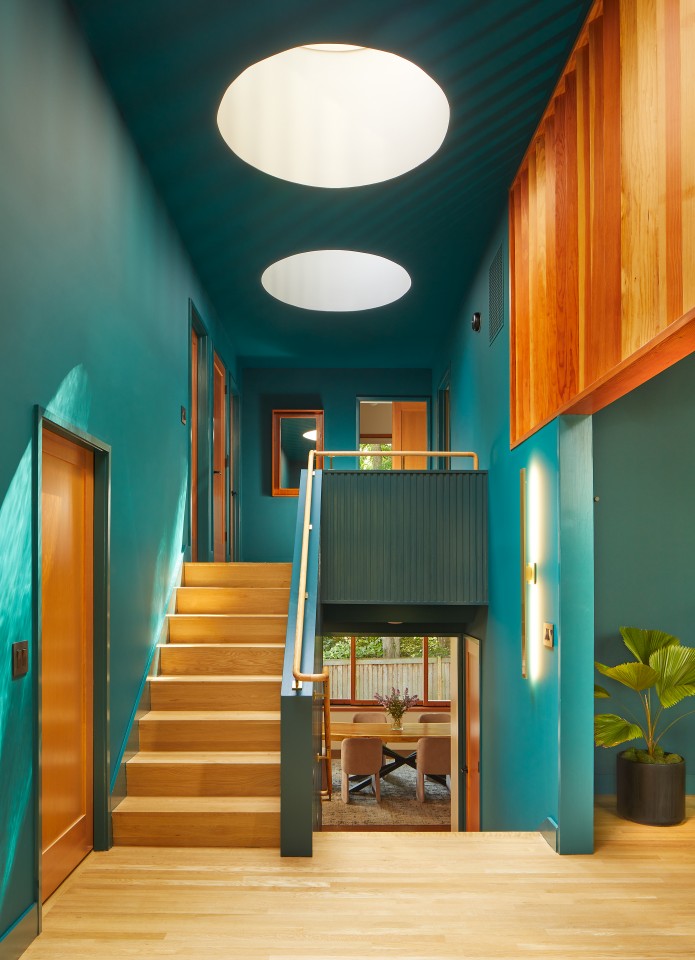 MERIT ─ Residential Architecture
PROJECT Addition / Alteration Chevy Chase, Maryland
LOCATION Chevy Chase, Maryland
ARCHITECT Balodemas Architects, Chtd.
ARCHITECTURAL DESIGN TEAM Louis Balodemas, AIA and Veena Shahsavarian, AIA
OWNER/CLIENT Confidential
CONTRACTOR Heb-N-Co Construction
PHOTOGRAPHER Anice Hoachlander
PROJECT DESCRIPTION
In 2019, a fire destroyed the interior of this split-level in Chevy Chase. The redesign moved the kitchen and dining room to the lower level, expanded the bedroom level with overhangs, and extended the upper roof forward to give the living room and entry generous height. The result is a subtle modernization that integrates the house into the wooded setting and introduces a bold interior palette with jewel tone paints, earthy finishes, and whimsical wallpapers.
JURY
The jury was charmed by this project due to the subtle changes in plan that create significant spatial upgrades in this fire damaged mid century home. In addition the interiors are awash in color and minimal well executed details that create inviting and warm spaces.
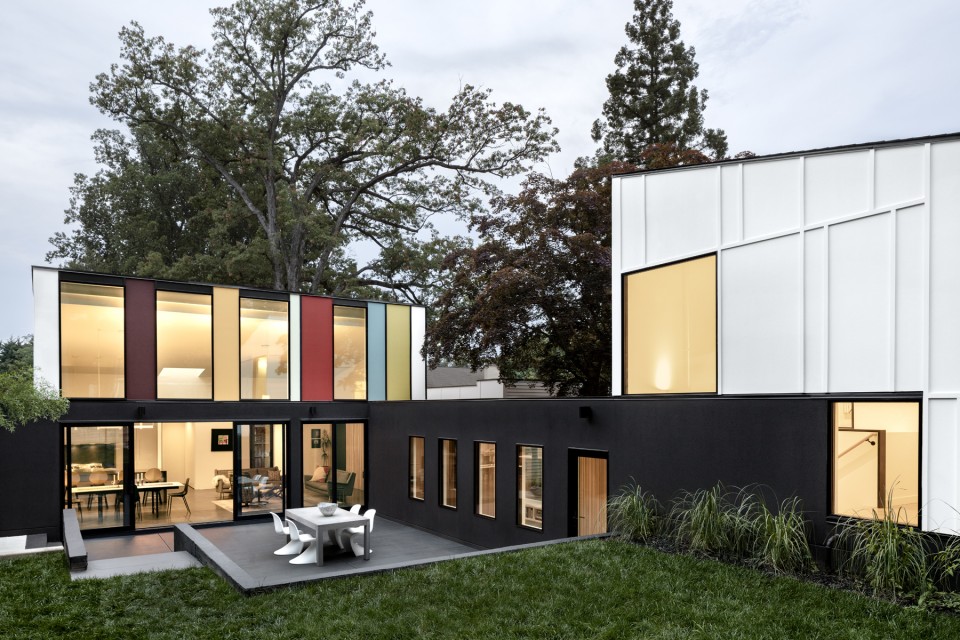 MERIT ─ Residential Architecture
PROJECT Red Maple House
LOCATION Bethesda, Maryland
ARCHITECT Colleen Healey Architecture, LLC
ARCHITECTURAL DESIGN TEAM Colleen Healey, AIA
OWNER/CLIENT Confidential
CONTRACTOR Cabin John Builders / Josh Rosenthal and Neal Rosenthal
PHOTOGRAPHER Jennifer Hughes
PROJECT DESCRIPTION
The Red Maple House is made up of two buildings (one the shell of an old carriage house) that are connected by a long low gallery space and nestled around an existing mature maple tree. Simple shed roofs open up to the tree and a private courtyard for entertaining. Small ancillary spaces off of the main rooms make the house feel more expansive than the 3300sf of its footprint and provide for flex space as the family grows.
JURY
The jury found itself drawn to this home for its exuberant design and playful use of color. With a careful eye, one can see traces of the previous home find its way into the renovation. The site responsiveness is exceptional, with a low profile and deep setback the home has a sensitively light footprint. The diligence taken to preserve and celebrate the on-site Maple tree should serve as a case study for similar sites.
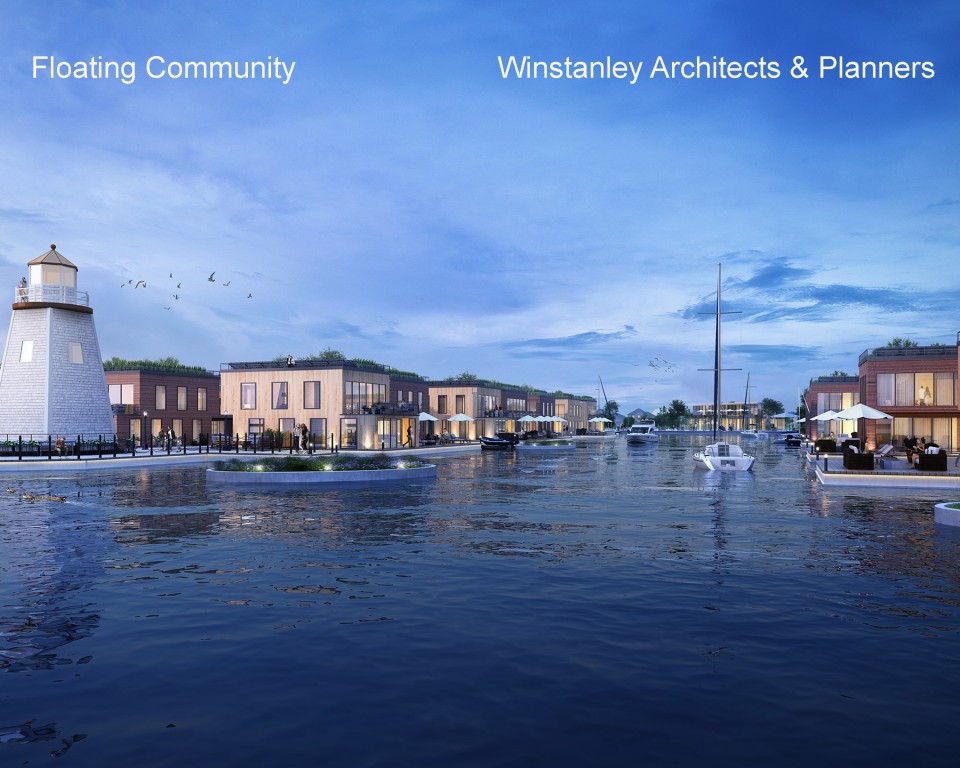 MERIT ─ Urban Design & Master Planning
PROJECT Floating Community
LOCATION Belmont Bay, Virginia
ARCHITECT Winstanley Architects + Planners
ARCHITECTURAL DESIGN TEAM Michael Winstanley, AIA AICP; Leejung Hong, Corey Manno
OWNER/CLIENT Confidential
CONTRACTOR N/A
PHOTOGRAPHER LiFang
PROJECT DESCRIPTION
The central design concept is to create a livable community of affordable housing connected to land-based infrastructure yet floating on a body of water. Individual Net-zero homes are constructed off site on floating concrete shell foundations and floated into place. Both unique and inventive, the floating communities will provide multiple benefits across the triple line of social, economic and environmental values, as well as a high walkable quotient with human scale reinforced throughout the project.
JURY
Although we wondered about property rights and resilient infrastructural solutions, the jury was intrigued by this fresh take on housing. Living on the water is not new, but it is not often part of the urban planning conversation today. We commend the design team for exploring a novel solution allowing us to imagine a new type of urban experience.
SPECIAL RECOGNITION AWARD
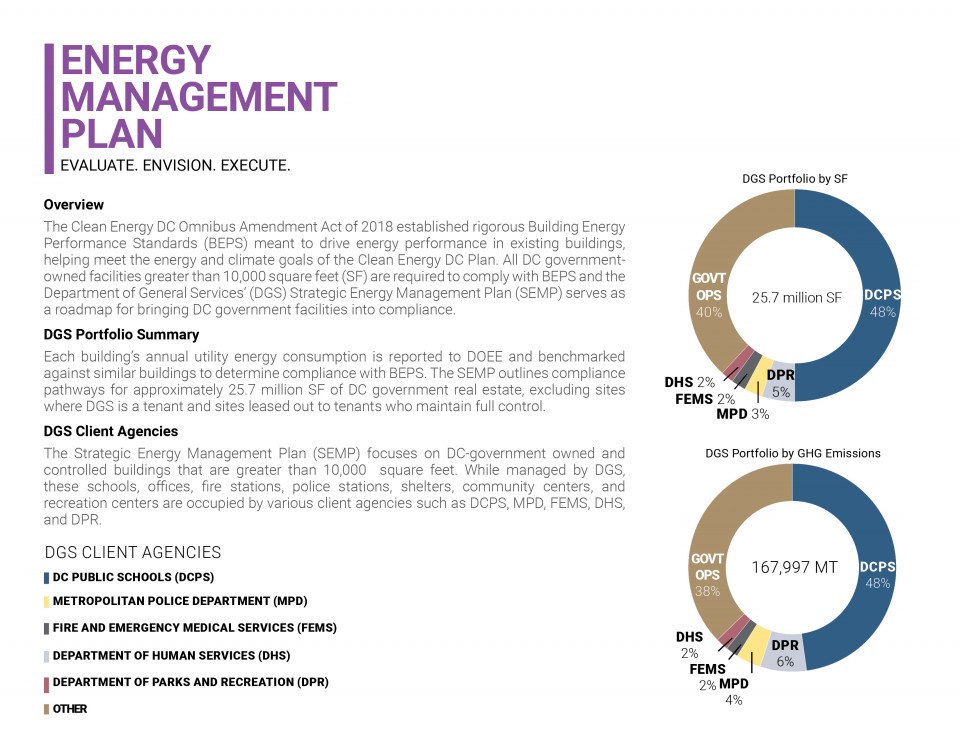 SPECIAL RECOGNITION ─ Urban Design & Master Planning
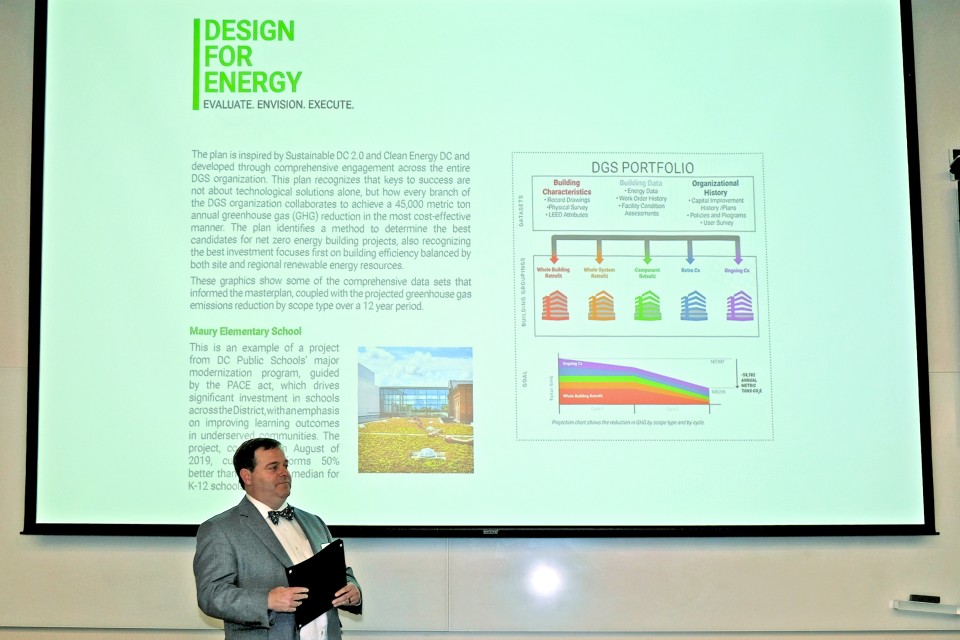
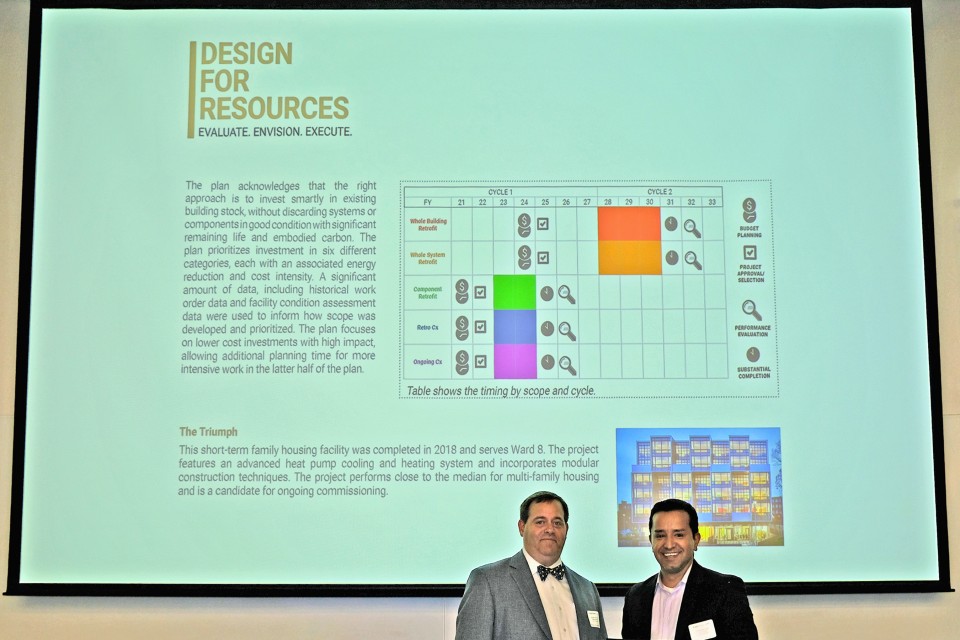
PROJECT DC Energy Master Plan
LOCATION Washington, District of Columbia
ARCHITECT DLR Group
ARCHITECTURAL DESIGN TEAM Rachel Chung, Roger Chang, Coral Pais, Nick Maiorana, Matthew Davitt
OWNER/CLIENT Jen Croft, Deputy Associate Director (DGS Sustainability and Energy), Department of General Services
CONTRACTOR N/A
PHOTOGRAPHER Alan Karchmer, Kevin Reeves
PROJECT DESCRIPTION
The goal of the DC Strategic Energy Management Plan (SEMP) is to identify a multi-decade roadmap for energy management, including targeted conservation scope by building and transformative policies and programs that support an energy management culture. The SEMP was developed through broad stakeholder engagement. The outcome of this data-driven plan is a clear roadmap for investment, with a focus on early retro-commissioning and auditing work, followed by more intense investments in ultra-low energy buildings.
JURY
It was a pleasure to see a project that took on a larger, global topic and grounded that in the workings of an urban region. While not explicitly design focused, or even architecturally present in the documentation, the jury recognized the profound effect this work will have on the built environment by implementation. It was important, as such, to acknowledge the role of design in arenas that extend beyond the physicality of our work and see the real invention and impact that policy and regulatory work can have in our cities.
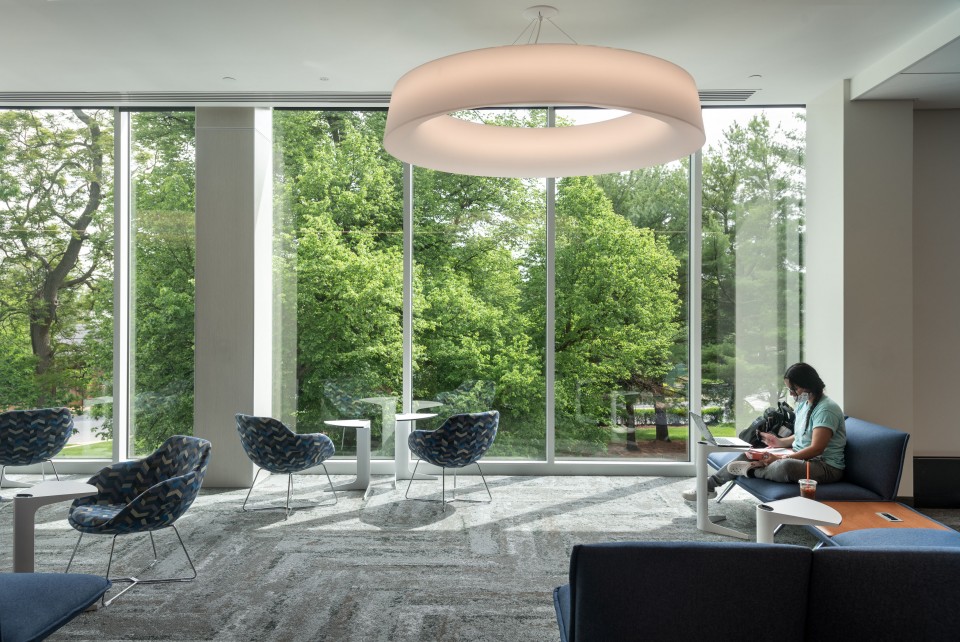 SPECIAL RECOGNITION ─ Institutional Architecture
PROJECT Beneficial-Hodson Library & Learning Commons
LOCATION Frederick, Maryland
ARCHITECT Schwartz/Silver Architects
ARCHITECTURAL DESIGN TEAM Angela Ward Hyatt AIA, Mark Schatz AIA, Robert Silver FAIA, Chelsea DeCrescenzo Gozzi NCIDQ, Isaac Andrade
OWNER/CLIENT Hood College
CONTRACTOR Gilbane Building Company
PHOTOGRAPHER Paul Burk
PROJECT DESCRIPTION
Although only thirty years old, the existing building was more a book storage facility than a place for students to actively engage with information. The renovation transformed the library into a Learning Commons, creating environments for collaboration, technology, and instruction. Initially conceptualized as an interior renovation, new expanses of curtainwall glass were introduced to maximize views and access to natural light, rebranding the Neo-Georgian library as a new, welcoming hub for the campus community.
JURY
We wanted to recognize this project for optimizing resources to create a transformative project. The design team was able to go beyond the interior renovation brief and identify opportunities to spend funds on exterior improvements that fill the interior spaces with light. The project exemplifies how building trust with the owner to redefine the project can lead to better buildings.
OVERALL JURY COMMENTS:
It was interesting to see such a wide variety of architectural responses in the project types represented in the submissions, and in particular housing, which made up the majority. There were many thoughtful and sensitive renovations as well as a wide variety of expressive new builds, exploring new material and compositional ideas. The consistent theme in the commercial and institutional projects was a focus on community impact and user experience, which impressed the jury. We do wish that more projects were able to speak to an aggressive approach to sustainable design within the AIA Framework as this year’s PV award winner showed. On the whole, AIA PV has delivered a strong and diverse collection of projects. Congratulations on the great work.

The AIA Potomac Valley Excellence in Design Awards Competition is designed to encourage and recognize distinguished architectural achievement; to honor the architectural team, their clients and consultants who work together to improve the built environment; to demonstrate the breadth of services architects provide; and to raise public consciousness of the Architect’s role in shaping the quality of life through design excellence. The awards program recognizes excellence in design and planning. Consequently, the awards program honors the full range of quality work completed or designed by eligible members of the AIA Potomac Valley Chapter and AIA Members from other chapters for work located in AIAPV's region.
AIA Potomac Valley provides leadership, communication, education, and advocacy in support of architects and their constituencies in the Potomac Valley region. We empower members to advance their roles in service to society; act as a collective voice to help cultivate the future of the architectural profession; foster innovation and sustainability in design; and are a knowledge resource to members and the public, raising awareness of the value of the architecture profession. The chapter serves roughly 670 members in Allegany, Charles, Frederick, Garrett, Montgomery, Prince George’s and Washington counties in Maryland.
Our charitable arm, the Potomac Valley Architecture Foundation, promotes architectural education, training and research, and public awareness of the field of architecture.
Photo Gallery

2022 PROJECT ENTRIES SLIDESHOW

2022 INTERVIEW

Jury Chair Christian Rodriguez and Awards Committee Chair Scott Knudson
2022 DESIGN + LEADERSHIP AWARDS SPONSORS

CLICK ABOVE IMAGE TO LEARN ABOUT OUR SPONSORS
BAR SPONSOR


NAPKIN SKETCH SPONSOR


SUSTAINABILITY SPONSOR

EMERGING LEADERS SPONSOR


BENEFACTOR SPONSOR